How to Plan Transport for a Corporate Offsite in Melbourne

Transport is what decides whether your offsite starts on time. Get people moving in one coordinated block and the day runs to schedule. Leave everyone to find their own way and you lose the first hour to stragglers, parking dramas and people circling the block looking for the entrance.
Why does transport decide whether the day starts on time?
A corporate offsite has a fixed start time, whether that is a briefing at a Yarra Valley winery or a team session in the Mornington Peninsula hinterland. If your team drives separately, some will be early, some will be late, and someone will always get turned around on unfamiliar country roads. One vehicle, or a small coordinated fleet, means everyone arrives together and the day starts when you planned it to start.
It also removes the drinking and driving problem. If the day includes wine tasting, a long lunch with drinks, or a Christmas party, your people need to get home without getting behind the wheel. Chartered transport takes that decision off the table before it becomes an issue.
One big coach or several vans, which is right for your group?
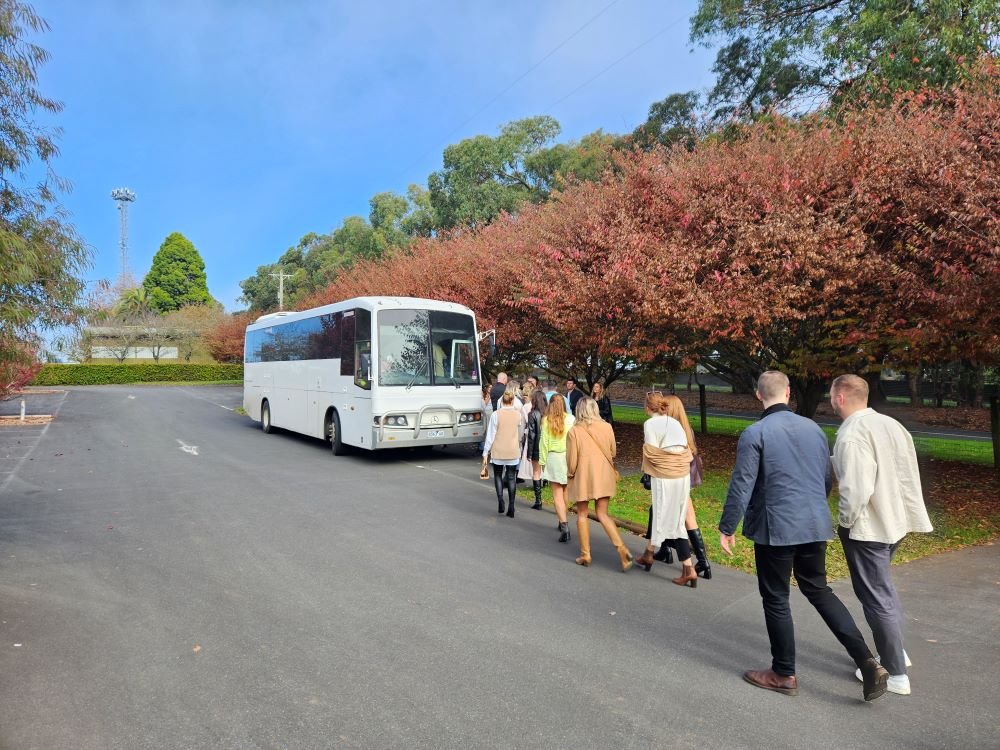
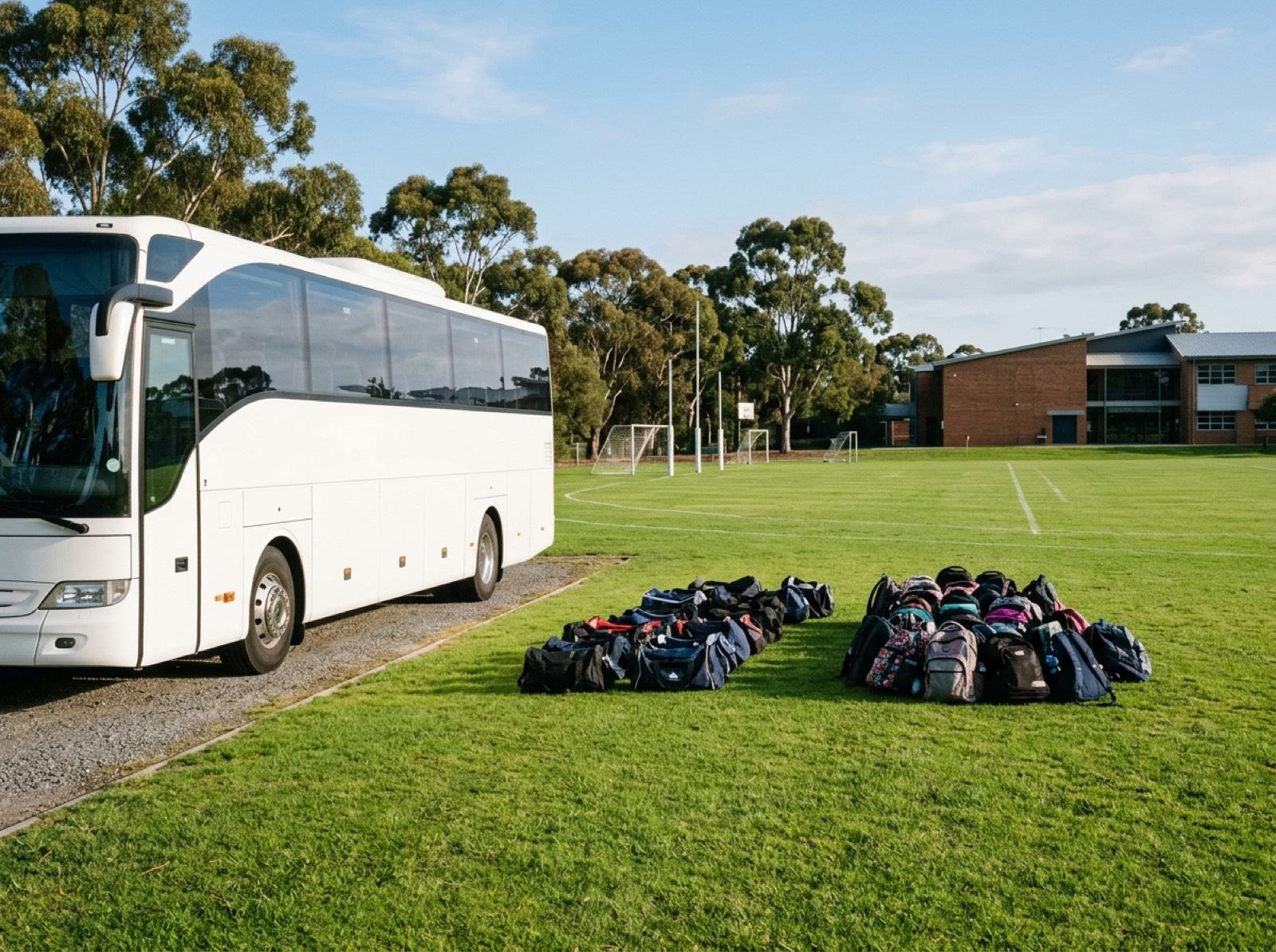
It comes down to headcount and pickup spread. For a single office pickup with 30 to 50 people, a 57-seat full-size coach or a 25-seat mini coach is usually the simpler option. Everyone boards in one place, one departure time, one return time.
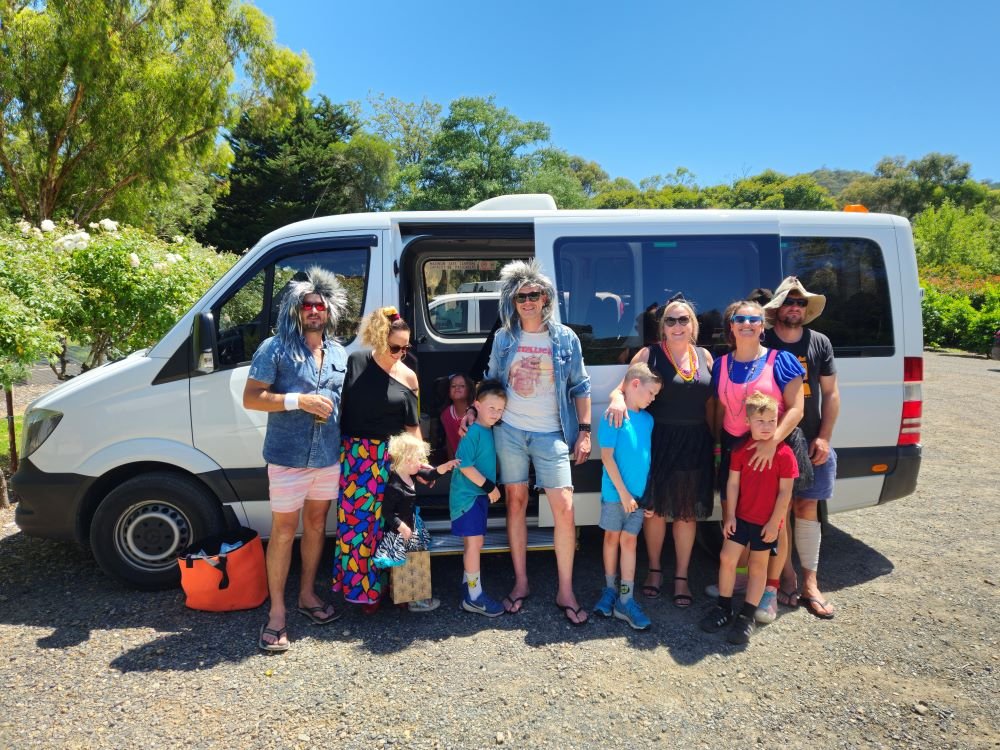
For smaller teams, or a group scattered across several offices and hotels, a few smaller vehicles often work better. Red Carpet Charters runs 7-seat Mercedes-Benz V-Class vans and 14-seat Mercedes-Benz Sprinters alongside the mini coaches and full-size coaches, the same fleet used for corporate event transport across Melbourne. A 40-person group coming from three different buildings can be split across two or three vans rather than forced to one central pickup point.
How do multi-point pickups work?
Pickups can be arranged anywhere across Melbourne, from Melbourne CBD offices to hotels in Docklands, or several addresses in one run. Tell the operator every address and the order people should be collected in, and the vehicle can loop through the city before heading out to the Yarra Valley or Mornington Peninsula. This matters most on client hosting days, where guests are often coming from different hotels rather than one office.
What is a run sheet and do you need one?
A run sheet is the one-page plan the driver and your office work from: departure time, every stop with an address, how long the group stays at each stop, and the return time. For a day with multiple stops, a winery lunch, a team activity, a second winery, a run sheet keeps everyone on schedule and gives your office a clear picture of where the group is at any point in the day.
Build the run sheet with your operator before the day, not on the morning of. Once it is locked in, the driver works to it and you do not need to manage timing yourself.
Yarra Valley or Mornington Peninsula, which suits your offsite?
Both are proven offsite destinations and the right choice depends on what you want from the day. The Yarra Valley suits a full day out, wineries, a long lunch, and space for a team activity between stops. The Mornington Peninsula works well when you want a coastal change of scenery, or when part of the group is flying in and a shorter run matters.
Same drivers and vehicles handle both, so the choice is about the day you want, not about the transport.
What about Christmas parties and client hosting days?
December is the busiest season for both. A Christmas party usually means one pickup point, one venue, and a late return, often with drinks involved, which makes chartered transport the safer call for the whole team. Client hosting days are different again, guests coming from hotels or the CBD, a tighter schedule, and a level of presentation that matters. For similar client-facing days built around meetings, see conference transfers. Same drivers, same fleet, a run sheet built around the client's day rather than the team's.
How does budgeting work with per-vehicle pricing?
Pricing is quoted per vehicle, not per seat, so the cost does not creep up as more people join the day. You get one written quote and one invoice, and no deposit is taken until the booking is confirmed. That makes it straightforward to budget for an offsite months out, you know the number before you commit, and it does not change if two more people are added to the guest list. For typical figures, see our guide on what bus charter costs in Melbourne.
What should you send the operator before booking?
A few details up front make the quote accurate and the day run smoothly:
- Headcount, and whether it might change closer to the day
- Every pickup and drop-off address
- Departure and return timings, plus any stops in between
- Dietary or accessibility needs for the group
Send this across early and the operator can confirm the right vehicle, or combination of vehicles, straight away.
How far ahead should you book for November and December?
November and December are the busiest months for corporate transport in Melbourne. Christmas parties, end-of-year client hosting, and offsites before the break all land in the same six-week window. Lock in your date and vehicle as early as you can, ideally as soon as the offsite date is confirmed, rather than waiting until every detail is finalised.
Ready to plan transport for your offsite? Get in touch for a written quote, one invoice, one number, and no deposit until it is confirmed.
Frequently asked questions
How far in advance should we book transport for a corporate offsite?
As soon as the date is set, especially in November and December when Christmas parties and end-of-year client hosting fill the calendar. Locking in the vehicle early means the date and fleet you want are still available.
Can transport pick up from multiple offices or hotels?
Yes. Pickups can be arranged anywhere across Melbourne, including several addresses in one run, so a group coming from different offices or hotels can still travel together on the same schedule.
Is pricing per person or per vehicle?
Pricing is per vehicle, not per seat, quoted in writing on one invoice. That keeps the number fixed for budgeting even if a few extra people join the day.
What information do you need to provide a quote?
Headcount, every pickup and drop-off address, departure and return timings, and any dietary or accessibility needs. With those details the right vehicle or combination of vehicles can be confirmed quickly.