Conference Delegate Transport in Melbourne: Shuttles, Loops and Airport Runs That Actually Run on Time
Conference transport goes wrong when it is planned as one big job instead of three separate ones. Airport arrivals, venue loops and evening transfers each behave differently, and each needs its own vehicle plan. Get that split right and delegates stop noticing the transport at all, which is the actual goal.
What are the three transfer types a conference actually needs?
Every multi-day conference has the same three transport jobs, even if the program looks different on paper.
The first is airport arrivals and departures. Delegates land across a spread of flights over one or two days, so this is usually met and greet with a mix of individual cars and small shuttles rather than one big vehicle waiting around for stragglers.
The second is hotel to venue loops. This is the daily grind of getting people from where they slept to where the sessions are, and back again, sometimes more than once a day if the venue and the hotel block are not next to each other.
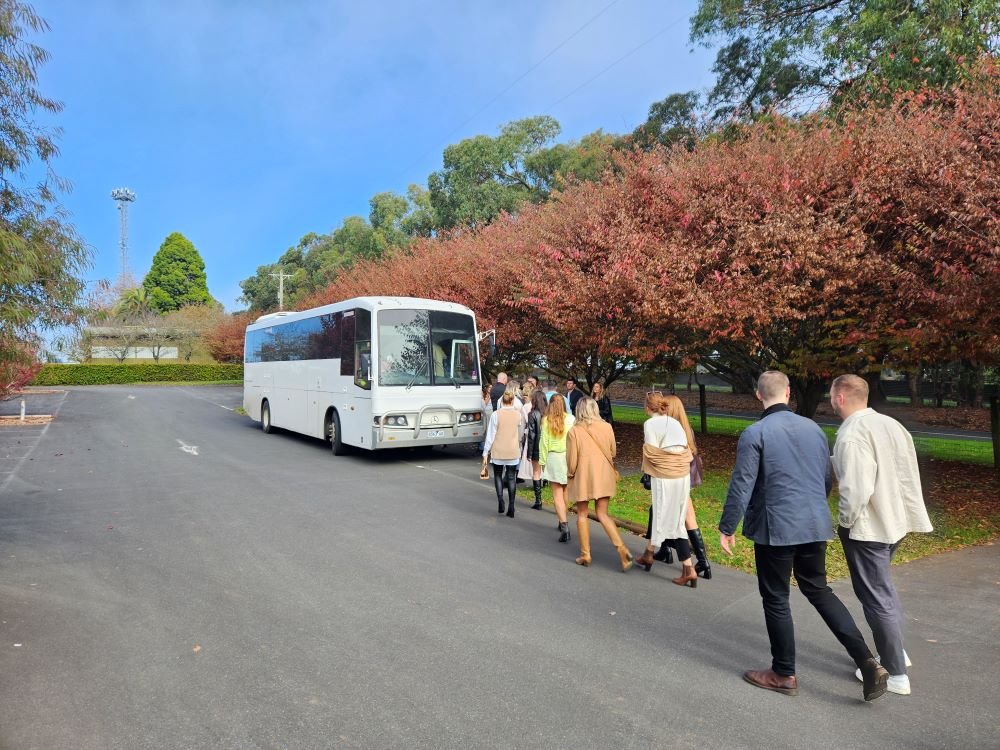
The third is offsite dinners and gala nights. These move the whole delegate list at once, on a tighter clock, often to a venue that was not designed with fifty coaches in mind.
Treating these as three separate briefs, each with its own vehicle count and timing, is what keeps a conference transport plan from collapsing on day two.
Scheduled loops or dedicated vehicles, which one do you need?
A scheduled loop is one or two vehicles running a fixed route on a timetable, picking up whoever is ready. It works well for hotel to venue transport when delegates are spread across the day and do not all need to move at once.
A dedicated vehicle is booked to one group or one purpose for a set block of time. This suits VIP guests, speakers with a tight window before they present, or a breakout session that runs on its own schedule away from the main program.
Most conferences need both. Loops handle the bulk of delegate movement, and dedicated vehicles cover the people whose schedule cannot slip. Deciding this upfront, rather than trying to force everyone onto one shuttle, is what stops speakers arriving late to their own sessions.
How do you size vehicles for plenary sessions versus breakouts?
A plenary session moves everyone at the same time, so it needs the bulk capacity, full-size coaches at 57 seats or a run of 25-seat mini coaches timed close together.
Breakout sessions split delegates into smaller, staggered groups, so the right vehicle is usually a 14-seat Mercedes-Benz Sprinter or a mini coach running more frequently rather than one large coach sitting half empty between sessions.
Sizing by session, not by total delegate count, is the difference between vehicles that are full and useful and vehicles that are big and idle. It also means you are not paying for coach capacity you only need twice a day.
Why does a run sheet and a single point of contact matter so much?
A run sheet lists every pickup, every drop off, every time and every vehicle for the whole conference in one document. Without it, timing lives in someone's head or across a chain of texts, and that is where delays start.
A single point of contact on the conference side, and a single point of contact from the transport operator, means changes get communicated once instead of getting lost between the venue, the hotel and the AV team. When a session runs over, that one call resets the whole day's loop timing instead of leaving drivers waiting on outdated instructions.
What makes Southbank and CBD venue loading a problem for drivers who do not know them?
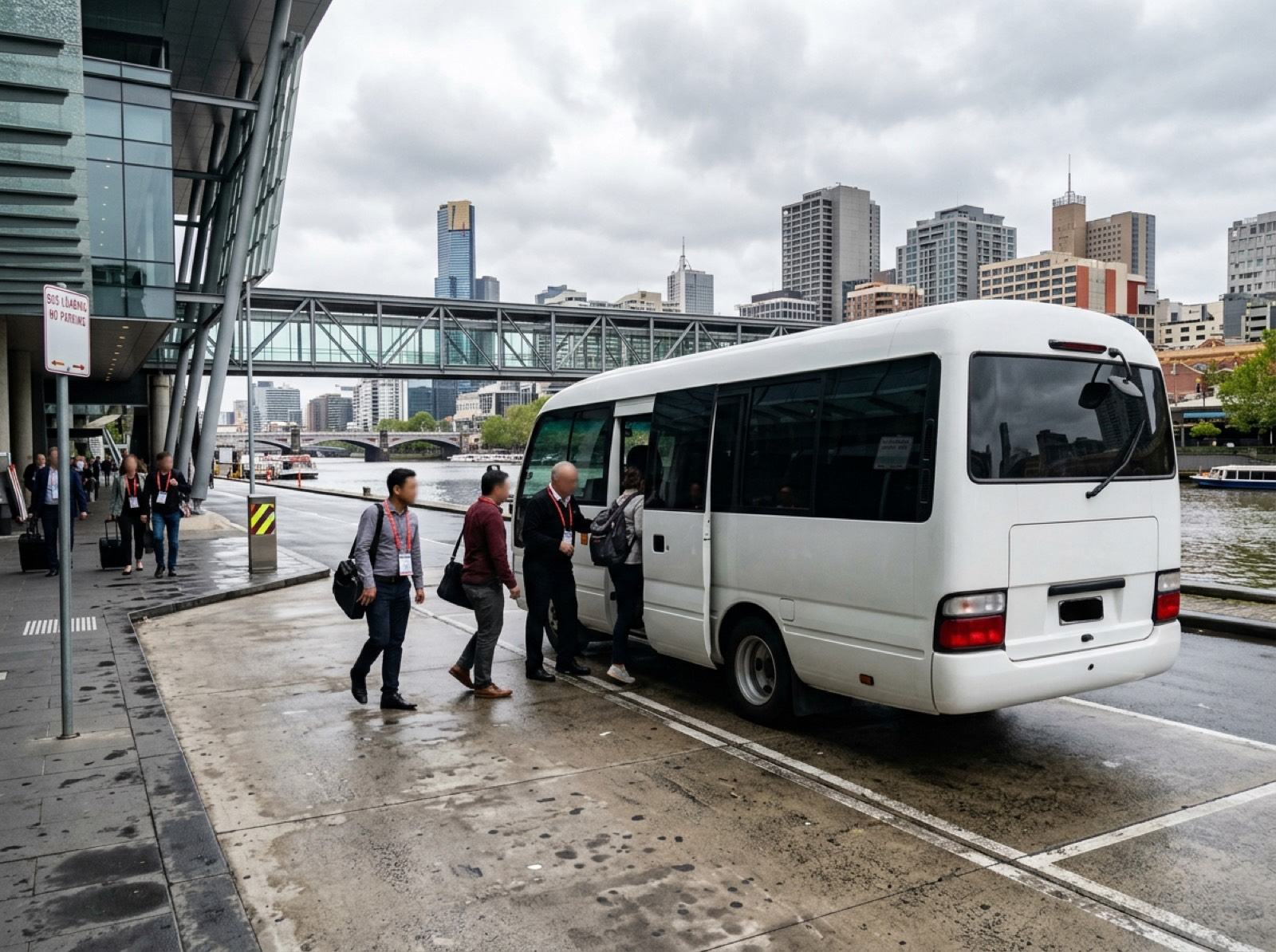
Southbank and the Melbourne CBD have loading bays that fill fast, clearways that switch on at set times, and one-way systems that catch out drivers who have not worked the area before. A coach that cannot find its bay in time pushes the whole loop back.
Local driver knowledge means knowing which loading zone actually works for a given venue, what time it clears, and the backup option when it is taken. That knowledge is built from doing the run before, not from a map.
What about VIP guests and speaker cars?
Speakers, keynote guests and VIP delegates usually need something separate from the loop schedule, a dedicated car that is on time to the minute and does not depend on anyone else's session running to schedule.
A 7-seat Mercedes-Benz V-Class covers this well, whether it is one speaker or a small VIP party travelling together. Booking these as dedicated vehicles rather than folding them into the general shuttle is what protects a keynote from a late start.
How does conference transport fit into the budget?
Pricing is per vehicle for a block of time, not per delegate, which makes it straightforward to build into a conference budget once you know the vehicle mix. A quote is provided in writing with the run sheet attached, so the transport line in the budget matches exactly what is booked.
There is no deposit required until the booking is confirmed, and multi-day conferences are welcome, with the same vehicles and drivers available across the full program rather than a different operator each day.
What should you send the operator, and when?
Send the delegate numbers by session, the venue and hotel addresses, the draft program with timings, and any VIP or speaker requirements as early as you have them, even in draft form. A rough version months out is more useful than a final version two weeks before the conference, since vehicle availability for the right dates tightens up as the date gets closer.
From there, the run sheet gets built around your program, and it gets updated as the program firms up. If you are planning a Melbourne conference and want the transport line mapped out properly, get in touch for a written quote.
Frequently asked questions
How far in advance should we book conference transport in Melbourne?
As early as you have a draft program, even months out. Vehicle numbers for larger conferences, especially around Southbank and CBD venues, get booked up well ahead of the date, and an early written quote lets you lock the transport line into the budget.
Can one operator handle airport transfers, daily loops and the gala night?
Yes. Using the same operator across all three means one run sheet, one point of contact, and drivers who already know your venues and hotel, rather than coordinating three separate suppliers on the day.
Do you charge per delegate or per vehicle?
Per vehicle, for a block of time. That makes it easy to plan a transport budget around your delegate numbers and session structure without recalculating per head as the list changes.
What vehicles suit a multi-day conference with breakout sessions?
A mix works best. Full-size coaches or several mini coaches for plenary sessions when everyone moves together, smaller Sprinters or mini coaches for staggered breakout groups, and a V-Class for speakers or VIP guests who need a dedicated car.